
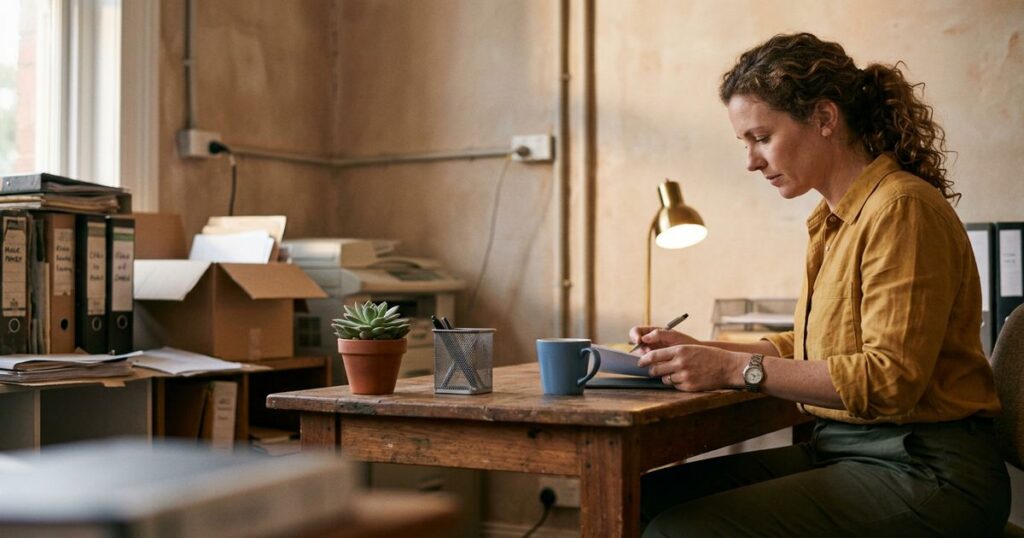
What is a sole trader and how does this business structure work?
A sole trader is an individual who owns and operates a business as a single entity, bearing full personal liability for all business debts and obligations. It is the simplest business structure in Australia, but “simple” does not mean risk-free.
The legal definition of a sole trader in Australia
The ATO describes a sole trader as an individual who is legally responsible for all parts of the business, including debts and losses, under the ATO’s definition of a sole trader. You trade under your own name or a registered business name, use your individual tax file number, and usually need an ABN before you start invoicing customers.
If you are still in the early setup stage, this guide to starting your business can help you work through the first steps.
How a sole trader differs from a company or partnership
A sole trader is not legally separate from the person who owns it. A company is a separate legal entity, while a partnership involves two or more people carrying on a business together.
That difference matters. As ASIC MoneySmart guidance on sole traders explains, sole traders are personally liable for business debts. If the business cannot pay, your personal savings or property may be exposed.
Common industries where sole traders operate
Sole traders are common across hands-on trades, services and creative work. For example:
- Freelance graphic designers
- Electricians and plumbers
- Personal trainers
- Bookkeepers
- Consultants
- Gardeners and cleaners
I have seen many construction subcontractors start this way because it is fast and affordable. The trap is thinking that a simple structure means you can be casual with money management. You cannot.
Does a sole trader actually need a separate business account?
While there is no universal law that forces every sole trader to open a business bank account, the ATO expects business income and business expenses to be clearly distinguishable from personal finances. Once GST registration applies, keeping the two separated becomes a practical necessity for accurate BAS lodgement and ATO compliance.
What the ATO says about separating business and personal finances
The ATO expects you to keep records that clearly show business income, business expenses and tax positions. A dedicated sole trader bank account makes that easier because every business transaction sits in one place.
You can technically use a personal account if your bank allows it and your records are clean. But from a practical point of view, that creates more work than it saves.
When a business account becomes effectively mandatory
A business account becomes functionally necessary when:
- You register for GST
- You lodge BAS
- You receive regular client payments
- You claim tax deductions for business expenses
- You hire staff or pay contractors
- You want accounting software to sync clean transaction data
If you are close to the GST threshold, read more about sole trader GST obligations before your reporting workload grows.
Common misconceptions sole traders have about using personal accounts
The biggest misconception is, “I will just sort it out at tax time.” That may work when you have a handful of transactions. It falls apart when you have fuel, tools, subscriptions, insurance, equipment, client deposits and personal groceries all on the same card.
The ATO’s small business tax gap data estimates a $12.3 billion small business tax gap, with record-keeping failures playing a role. Poor financial separation is not just untidy. It can become a real compliance issue.
That is why a separate business account sole trader setup is one of the first admin decisions I recommend.
What are the real benefits of a business account for sole traders?
Opening a dedicated account simplifies tax time, makes business expenses easier to track, and gives clients more confidence when they pay you. It also creates a cleaner audit trail if the ATO ever asks questions about your records.
Cleaner financial records and simpler tax returns
A dedicated sole trader bank account gives you one place to review income and costs. That means less time scrolling through personal spending and fewer missed deductions.
The practical benefits include:
- Cleaner transaction history for bookkeeping
- Easier BAS preparation if you are registered for GST
- Simpler expense tracking across fuel, tools, subscriptions and materials
- Better cash flow visibility because business money is not mixed with personal spending
- More reliable tax deductions because business purchases are easier to identify
- A clearer audit trail if the ATO reviews your records
How business accounts protect your personal assets
A business account does not remove personal liability for sole traders. Your business structure still matters. But financial separation helps you see what belongs to the business and what belongs to you personally.
That matters when you are making decisions about tax, debt, insurance and cash flow. If your business money is mixed with household savings, it becomes much harder to understand what the business can afford.
The credibility signal a business account sends to clients
Clients notice payment details. A dedicated account with a business name, where available, can look more professional than asking customers to pay into a personal account.
It also helps when you connect accounting software. Tools that sync bank feeds work better when transactions are not cluttered with personal spending. If you want a low-admin business account sole trader system, clean bank data is the foundation.
What are the risks of mixing personal and business finances?
Mixing personal and business money as a sole trader creates ATO compliance risk, makes tax time slower, and can increase the chance of missed deductions. Because sole traders carry personal liability, unclear records also make it harder to see your real exposure.
The ATO compliance risk of poor record-keeping
If your transactions are mixed, your records depend on memory. That is risky.
Imagine a self-employed carpenter using one card for timber, lunch, petrol, kids’ school supplies, parking, new drill bits and streaming subscriptions. At tax time, they spend hours deciding what was business-related. A few receipts are missing. Some costs are forgotten. Some items are claimed incorrectly.
That is a stressful way to run a business.
Personal asset exposure for sole traders
A sole trader is personally responsible for business debts. If records are messy, you may not see cash flow problems early enough. You might think the business has more money than it does because personal funds are sitting in the same account.
Clear financial separation gives you a sharper view of what is available for tax, suppliers, wages, super and your own drawings.
How mixed finances inflate your tax burden
Mixed accounts often lead to missed deductions. Small costs add up, including parking, bank fees, software subscriptions, protective clothing and home office costs.
If you cannot show a clear business purpose, you may not claim what you are entitled to. A separate business account sole trader structure helps reduce that friction.
What should you look for in a business account as a sole trader?
The best business account for sole traders keeps fees low, connects well with accounting software, and makes it easy to track income and expenses without extra admin. Most sole traders do not need a product built for large companies.
Essential features every sole trader should look for
When comparing options, look for:
- No or low monthly account fees
- No minimum balance requirement
- Easy internet banking and mobile access
- A business debit card
- Bank feed support for accounting software
- Clear transaction descriptions
- BAS-friendly expense tracking
- The option to create sub-accounts for tax, GST or savings
- Fast payment notifications
A good sole trader business account should help you stay organised without adding extra steps to your day.
Fee structures to watch out for
Fees matter more when you are running a small operation. Watch for:
- Monthly account-keeping fees
- Transaction fees after a set limit
- Cash deposit fees
- International payment fees
- Card fees
- Overdrawn account fees
A free account is not always the best choice if it lacks the features you need. But paying for corporate-style banking features you will never use is wasteful.
Features that support future business growth
Many sole traders start small, then grow into hiring help. If that might be you, choose an account that can support:
- Regular contractor payments
- Payroll-related payments
- Separate tax savings
- Higher transaction volume
- Software connections
- Easy export of statements and reports
The best business account for sole traders is the one that fits how you work now, while still giving you room to grow.
How do you set up a business account as a sole trader?
Setting up a business bank account as a sole trader is usually straightforward. Most banks and online providers let you apply in under 30 minutes if you have your ABN, personal ID and basic business details ready.
What documents you need to open a sole trader business account
For sole trader business account setup, prepare:
- Your ABN
- Personal photo ID, such as a driver licence or passport
- Residential address
- Business address, if different
- Registered business name, if you use one
- Contact details
- Tax file number, in some cases
- GST registration details, if registered
If you have not registered yet, start with your sole trader ABN before applying.
Step-by-step account setup process
Here is a simple process:
- Register your ABN so your business can trade and invoice properly.
- Choose the account type based on fees, access, software connections and transaction needs.
- Gather your documents before you start the application.
- Apply online or in branch depending on the provider.
- Activate internet banking and order a business debit card if needed.
- Move client payment details across to the new account.
- Link the account to accounting software from day one.
- Set rules for use, such as no personal expenses from the business account.
Mistakes to avoid when setting up your account
Avoid these common errors:
- Choosing an account with high monthly fees when your transaction volume is low
- Forgetting to update invoice payment details
- Leaving old direct debits attached to a personal account
- Not setting aside money for GST and tax
- Using the business account for personal groceries, rent or entertainment
- Waiting months before connecting accounting software
If you are transitioning from a personal account, pick a start date. From that date, all new business income goes into the new account and all business expenses come out of it. Then work through old direct debits one by one.
How do GST and tax obligations affect your business account?
Once a sole trader earns over $75,000 in a financial year, GST registration is compulsory. From that point, a dedicated account becomes essential for clean BAS lodgement, tax deductions and ATO compliance.
Understanding the GST threshold and what it means for your account
GST adds another layer to your records. You need to know which sales include GST, which expenses include GST credits, and what amount may need to be paid to the ATO.
A dedicated account helps you separate GST-related cash from personal spending. Many sole traders also create a separate savings account for GST and tax so the money is not accidentally spent.
How a business account simplifies BAS and tax return preparation
A business account acts like a built-in record-keeping tool. Every transaction has a date, amount, payee and reference. When connected to accounting software, those transactions can be categorised faster.
That makes BAS preparation much easier because you are not reconstructing the story from screenshots, receipts and memory.
Common tax deductions sole traders can track through a business account
Common deductions that are easier to capture include:
- Home office expenses
- Vehicle costs for business use
- Tools and equipment
- Professional subscriptions
- Business insurance
- Phone and internet costs
- Software expenses
- Training related to your business
Clean records help you claim legitimate deductions with more confidence.
How should you manage and separate personal and business finances?
The most effective way to separate finances as a sole trader is to treat the business account as the single entry point for business income and the single exit point for business expenses. Personal spending should stay out of it.
A practical system for keeping finances separated
Use this simple system:
- All client payments go into the business account
- All business expenses are paid from the business account
- Tax and GST money is transferred to a separate savings account
- Personal spending happens only from your personal account
- Receipts are saved as soon as purchases are made
- Bank transactions are reviewed weekly
This system is simple, but it works. It gives you clean records without needing to spend your weekends doing bookkeeping.
Tools and apps that make financial management easier
Your sole trader bank account should work with your bookkeeping process, not sit outside it. Accounting software, receipt capture apps and payroll tools can reduce manual data entry.
If bookkeeping is an area you want to tighten, this guide to small business bookkeeping is a useful next read.
How to pay yourself as a sole trader without blurring the lines
Sole traders do not usually pay themselves wages in the same way a company pays an employee. Instead, you draw money from the business.
A clean approach is to:
- Choose a regular payment rhythm, such as weekly or fortnightly
- Transfer a set amount from the business account to your personal account
- Label the transfer clearly, such as “owner drawings”
- Leave enough in the business account for tax, GST, suppliers and upcoming costs
This keeps personal finances separate while still giving you predictable income.
How can technology help you manage a sole trader business account?
The right technology stack, combining a business account, accounting software and payroll tools, removes much of the admin from running a sole trader business. It also keeps your records cleaner for tax, payroll and bookkeeping.
Accounting software integrations to look for
Look for a sole trader business account that supports bank feeds or open banking connections. This lets transactions flow into your accounting software so you can categorise income and expenses faster.
Helpful features include:
- Daily transaction syncing
- Receipt matching
- Expense categories
- GST tracking
- Exportable reports
- Mobile access
The goal is not to add more tools. It is to create fewer manual steps.
Online banking versus traditional banking for sole traders
Online banking can suit sole traders because it often provides faster setup, lower fees and better software connections. Traditional banking may still suit you if you deal heavily in cash or prefer branch support.
Ask yourself:
- Do I need to deposit cash often?
- Do I work mostly online?
- Do I need fast account setup?
- Do I want direct software integrations?
- Do I need support outside standard branch hours?
Your answer should guide the account you choose.
How payroll software fits into the picture for sole traders who employ staff or contractors
Payroll becomes a serious admin task once you hire your first employee. You need to think about pay runs, payslips, super, leave, tax withholding and Single Touch Payroll.
That is where Payroller fits naturally. Payroller helps sole traders manage payroll and STP reporting without doing it manually. If you are moving from solo operator to employer, it gives you a cleaner way to keep payroll records aligned with your business account and accounting system.
A good business account sole trader setup is not just about banking. It is about building a simple system that can support the next stage of your business.
According to ABS business entry data, approximately 50,000 new non-employing businesses entered the market in a single year. That tells me more Australians are choosing the sole trader path, and the financial habits they create early can shape how smoothly their business runs later.
Setting up a business account sole trader structure is one of the simplest, highest-value decisions you can make. Once that account is in place, the next step is keeping payroll and financial records just as clean. Payroller is built for sole traders who want to stay ATO-compliant without losing hours to admin. If you are ready to make payroll simpler, try Payroller for free.